There’s no shortage of debate: “which is better for windows: Windex or vinegar?“. Everyone’s got a trick — your neighbour swears by white vinegar, your mum sticks with Windex. But if you want clear answers from someone who cleans glass for a living — residential, commercial, high-rise — here it is: both Windex and vinegar have their place, but neither is a one-size-fits-all fix.
This article breaks it down plain and simple — what works, when to use what, and why you might be leaving more streaks than you started with.

Contents
What’s Actually in Windex and Vinegar
Let’s look at what you’re really spraying
Windex is a commercial window cleaner, usually made with:
- Ammonia (gives it that sharp smell and helps cut through grease)
- Surfactants (break surface tension so dirt lifts off easier)
- Dyes and fragrance (makes it blue and smell “clean” — doesn’t help the window)
- Sometimes alcohol or glycol is used for faster drying
White vinegar, on the other hand, is just diluted acetic acid — around 4–5% in strength — made from fermented grain alcohol or ethanol. Its acidic nature makes it good for tackling mineral deposits, grime on windows, and water stains.
So what does this mean for your windows?
- Windex is strong on greasy fingerprints and built-up gunk
- Vinegar is great for hard water spots and mineral residue
But both can fail if your technique or tools are wrong — more on that below.
Pros and Cons of Each Window Cleaner
Windex
Pros:
- Cuts through greasy residue and stubborn stains
- Dries quickly (especially if it contains alcohol)
- Available at most grocery stores and hardware stores
- Less elbow grease than vinegar
- Consistent, crystal-clear windows on standard glass windows
Cons:
- Leaves residue if over-applied or wiped too slowly
- Ammonia-based versions can damage coated windows, tempered glass windows, or tinted glass
- Not eco-friendly — includes harsh chemicals with strong odours
- Can react with special coatings and certain window types
Vinegar
Pros:
- Cuts through hard water stains, chalky residue, and some tough grime
- Natural, non-toxic, and eco-friendly window cleaning option
- Available in most food aisles and affordable
- Good for regular cleaning without introducing harmful chemicals
- Can be a cost-effective and versatile household item
Cons:
- Doesn’t dissolve grease or oil-based dirt as easily
- Can leave streaks if not rinsed or dried properly
- The acidic content can dull wood trims if care isn’t taken
- Needs to be combined with dish soap or Hydrogen Peroxide to tackle heavy grime
- Not great on exterior windows with tough stains from pollution or sea spray
Pro tip: A solid homemade solution includes 1 part vinegar, 1 part warm water, and a few drops of dish soap in a plastic spray bottle. Shake it up, and you’ve got yourself a solid homemade glass cleaner.

How to Actually Get Streak-Free Windows
It’s not just what you spray — it’s how you wipe
Whether you go with Windex or vinegar, the results come down to technique:
Use the right clothes
Avoid paper towels — they leave lint and can smear. Use a clean microfiber cloth or lint-free cloth for wiping, and a second dry cloth or dry microfiber cloth for buffing. A microfiber towel or clean cloth diaper also works well.
Avoid direct sunlight
Sunlight bakes the cleaner before you can wipe it, leading to streaks and water spots. Clean early morning or late evening for best results.
Start from the top
Work top to bottom on the entire window surface so drips don’t ruin clean sections.
Wipe edges and frames
Dab up extra liquid along the window frame, window tracks, and Window screens to avoid re-depositing dirt.
Use consistent motion
Wipe in a circular motion or in an “S” pattern — not random swipes. Keep it methodical.
Use two passes
One for lifting grime, one for polishing. Use a second clean, soft cloth to buff to a streak-free shine.

Choose based on window conditions
Use Windex if
- You’re dealing with greasy fingerprints, kitchen splash, or smoke film
- You want quick drying and minimal wiping
- You’re using it indoors on glass surfaces or in commercial buildings
- You prefer store-bought commercial products like Invisible Glass or Glass Cleaner Spray
- It’s part of your Melbourne window cleaning routine, and you want fast results
Use vinegar if
- You’ve got mineral deposits, chalky haze, or rain spots
- You’re cleaning outdoor windows near sprinklers or pools
- You want a natural cleaning solution or have health and safety concerns
- You’re worried about environmental impact and prefer a natural alternative
Here’s a quick breakdown:
| Window Issue | Windex | Vinegar |
|---|---|---|
| Fingerprints | Yes | Weak |
| Water spots | Limited | Strong |
| Grease build-up | Strong | Needs dish soap |
| Eco option | No | Yes |
| Dry time | Quick | Slower |
| Health risks | Yes | Safer |
What We Use On-Site
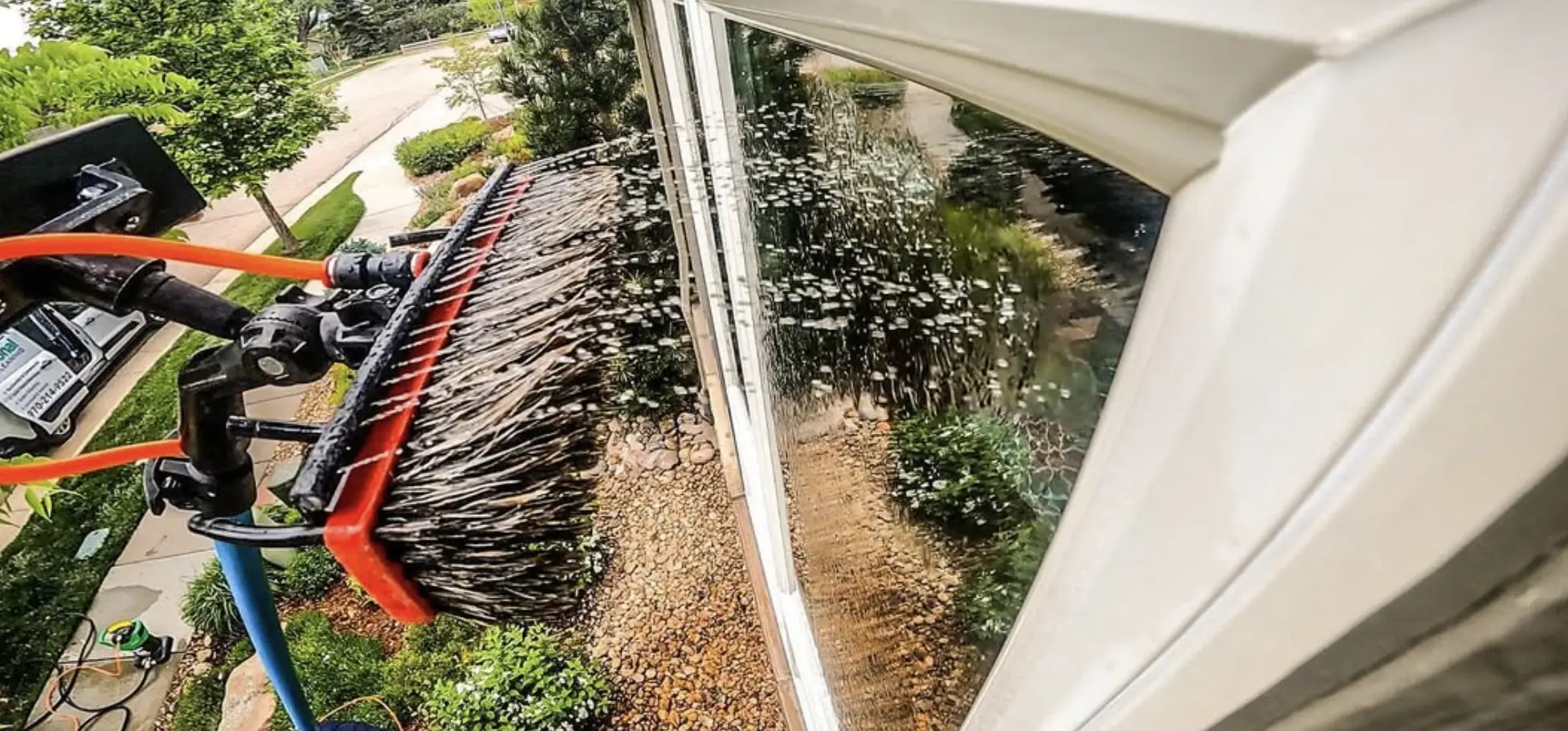
Out in the field — especially on High Rise Window Cleaning jobs in Melbourne — we don’t rely on off-the-shelf options.

The Window Cleaning Melbourne Crew uses:
- Purified water systems for a chemical-free, streak-free clean
- Extension pole setups for hard-to-reach areas
- Custom-made cleaners with safe, neutral ph levels
- Soft brushes and squeegees for delicate or coated windows
- Hose to power rinse large exterior surfaces
Window cleaners Melbourne teams like ours often face unique challenges with local water quality, tree sap, or bird droppings, and vinegar alone won’t cut it.
For heavy jobs, we might pretreat using a vinegar-based window cleaner, then follow up with purified water and a pro-grade drying process.
Common Mistakes That Cause Streaks
- Using dirty clothes or shammy towels from the garage
- Cleaning in direct sunlight
- Oversaturating the glass and forgetting to buff dry
- Not accounting for types of windows, like tempered glass windows or coated windows
- Using vinegar on hail-damaged or scratched panes without caution

If you’re booking a seasonal clean or prepping for a house inspection, our Window Cleaning Melbourne services cover everything from skylights to French panes.
Final Advice From a Pro
Before grabbing a bottle, take 30 seconds to assess:
- Is the mark grease or mineral-based?
- Is this inside or outside the glass?
- Do you have the right clothes and time to dry properly?
Or if you’re sick of streaks and want it done right, reach out to the Window Cleaning Melbourne Crew — we’ve got the gear and the glass know-how.
Final Verdict
It’s not about which is better — it’s about what suits your windows best.
- Use Windex or commercial cleaners for oily, indoor grime.
- Use vinegar for window cleaning when tackling hard water, grime on windows, or when you want an eco-friendly job.
- Want the best of both? Mix a simple homemade alternative: 2 cups water, 1/2 cup white vinegar, and a few drops of dish soap in a spray bottle.
And remember: it’s your tools and technique that make or break the result.
FAQ
Can I use apple cider vinegar instead of white vinegar on windows?
Stick with white. Apple cider vinegar’s acidic content is the same, but it’s got sugars and tannins that leave residue.
Are vinegar solutions safe for all window types?
Generally, yes — but avoid overuse on timber trims or special coatings. Always test on a small section.
Do I need to rinse vinegar off windows?
If it’s diluted and wiped properly, no. But if you see streaks, a quick rinse or buff with a dry microfiber cloth can help.
Is Windex safe to use near pets or kids?
Not really. Like many chemical cleaners, it can cause health risks if inhaled or ingested. Keep the area ventilated.
What’s the most cost-effective method long term?
Making your own solution with vinegar and water is one of the best low-cost window cleaning options, with long-term financial benefits and minimal environmental impact.